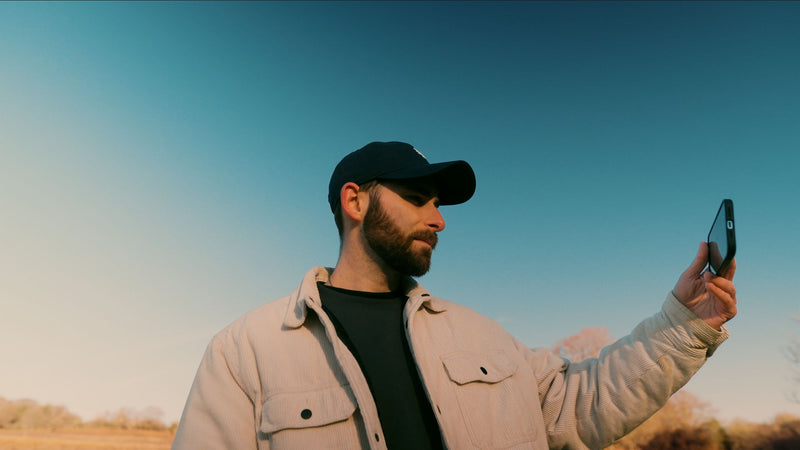
Getting into cinematography feels expensive before you've even started. Every guide tells you to buy a camera, then lenses, then lights, and you end up spending weeks reading reviews instead of filming anything.
You don't need any of that yet. You can practice with what you already own, a phone, a flashlight and a few boring tasks around the house, and learn more in a month than a new camera would teach you.
The quick version
Start with the phone in your pocket. That's your camera. The kit that makes the biggest difference, in this order, is a tripod to hold it still, a way to control the light (a flashlight or a few candles is enough to start), clean sound, and an ND filter. A dedicated camera comes after those, and a new lens after that.
Before you spend real money, film yourself and the boring stuff in your own space for a few weeks. Making a coffee, washing up, walking down the hall. It teaches you more than any piece of gear, and it shows you what you'd actually be buying for.
The full list is further down, split into what to start with, what to add next, and what's worth buying once you know what you shoot.
→ Free Aprture Conversion LUT Pack, for when you start shooting in log.
What you shouldn't do is buy a cinema camera before you can light a face with a window. That's where most of the wasted money goes.
What makes footage look cinematic
The things you notice in a film shot are light, movement and color. A face lit from the side by a window looks better than a face lit by a ceiling lamp on any camera. A slow, steady push in looks better than a handheld wobble on any camera. A consistent color grade ties the whole thing together.
Sensor size, resolution and brand matter much less than the internet suggests. They give you more room to work with, but they don't do the work for you. So the cheapest way to improve is to get better at the free parts first.
Level one: what you can start with today
This is the kit you already own, plus a few habits. Spend a few weeks here before you buy anything. It's where most of the learning happens. And the best part, it costs nothing.
Your phone or whatever camera you have. Any modern phone shoots good enough video to learn on. Use the back camera, and wipe the lens before every shoot. It's the most common reason footage looks soft.
24 frames per second. It's the film standard and it's what makes motion feel less like a video diary. Set it once and leave it.
Locked exposure and white balance. Auto settings drift mid-shot, and then no two clips match. Lock both before you press record.
A window. Soft light from a window, with the subject turned slightly toward it, is the best free lighting setup there is. Switch the room lights off so the colors don't fight each other.
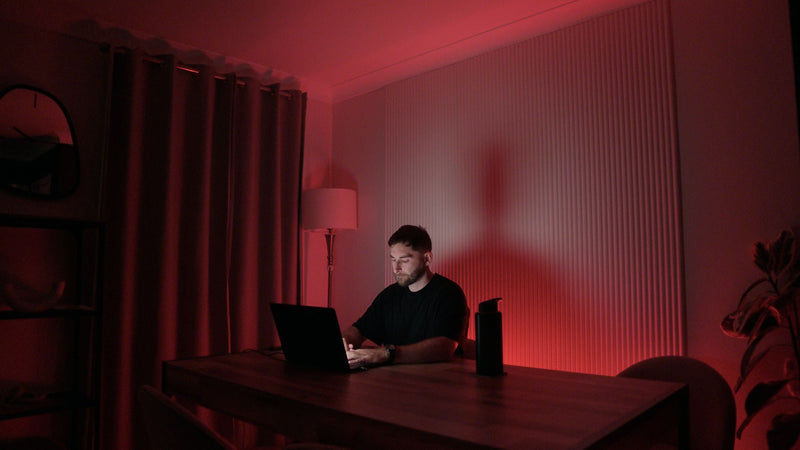
A flashlight or candles. One small light source in an otherwise dim room looks more cinematic than every bulb in the house switched on. Put a flashlight off to one side, bounce it off a wall or cover it with a sheet of white paper to soften it, or light a few candles near your subject. Keep the room lights off, set your white balance by hand so the warm light doesn't get corrected away, and keep candles clear of anything that burns.
A tripod, or something that acts like one. A cheap tripod is the best first thing you can buy, because steady footage is what separates it from a home video faster than anything else. Until you have one, a stack of books, a table or a wall does the job.
Before you buy anything, shoot your own space
This is the part most people skip, and it's the most useful one.
Film yourself and the mundane stuff around you. Making a coffee, washing up, typing at a desk, walking down the hall, tying your shoes. It doesn't matter that it's boring. You're not making a film yet, you're learning how light falls in a room, where to put the camera, and what makes a shot feel considered.
Pick one room and one task, then shoot it five different ways. Different angles, different light, window against flashlight against candles, camera on the tripod against held in your hand. Watch it back and you'll see what works almost immediately.
The footage will also tell you what's missing. If it's shaky, you need the tripod. If it's flat or noisy you need better light. If the sound is thin, you need a mic. That's how you work out what to buy, instead of guessing from a review.
Level two: the first things worth buying
If you're going to spend money, spend it here, in this order, and only after a few weeks of level one. Each one fixes a problem that a better camera won't, and by then you'll know which problems you actually have.
1. A tripod. Steady footage is the fastest way to look more professional. A cheap fluid-head tripod beats an expensive camera held in your hands.
2. One light, or a reflector. A single soft light or a cheap folding reflector teaches you more about shaping a shot than any lens will. You don't need a set. You need one and a bit of practice.
3. A microphone. People forgive soft or slightly flat footage. They don't forgive bad sound. A wireless lavalier mic or a small shotgun mic fixes most problems, and it matters even more if anyone is talking on camera.
4. An ND filter. It's sunglasses for your lens. It lets you keep a shutter speed around double your frame rate (1/48 or 1/50 at 24fps) in daylight, which gives natural motion blur. Without one, bright shots look sharp and strange, like a video game.
5. Spare batteries and storage. Not exciting, but nothing ends a shoot faster than a full card or a dead battery. Buy these before you buy anything fancy.
Level three: stepping up to a dedicated camera
Once you've outgrown the phone, here's what's worth paying for in a camera body. I mean properly outgrown: you've been shooting your own space for a while, and you can name what the phone can't do.
10-bit video. It's what stops the footage falling apart when you push the color around. If you plan to grade, this matters more than resolution.
A log profile. Log keeps more detail in the highlights and shadows so you have room to grade. It looks flat straight out of the camera, and it needs a conversion LUT before anything else. If you haven't shot it before, my post on Sony S-Log3 is a good place to start.
Reliable autofocus and stabilization. Beginners need these more than they think. Missed focus is hard to fix in the edit, and built-in stabilization saves shots you couldn't redo.
Interchangeable lenses. The lens shapes the image as much as the camera does. Being able to swap it is the whole reason to move off a phone.
For your first lens, a fast prime (a lens with a wide maximum aperture and a fixed focal length) gives you the shallow depth of field that looks cinematic, and it's usually cheaper than a zoom.
The full kit list
Here's all of it in one place. Start in the first column, and only move across when you've hit a real limit.
|
Category |
Start with |
Add next |
Later, if your work needs it |
|---|---|---|---|
|
Support |
Books, a table |
Fluid-head tripod |
Slider, monopod, cage and rig |
|
Stabilization |
Hold steady, elbows in |
Handheld gimbal |
Shoulder rig, larger gimbal |
|
Light |
Window |
Soft LED light, reflector |
Light set, modifiers, practical lights |
|
Audio |
Phone mic |
Wireless lavalier or shotgun mic |
Recorder, boom pole, headphones |
|
Camera |
Phone |
Mirrorless camera with 10-bit and log |
Second body, cinema camera |
|
Lenses |
Built-in lens |
One fast prime (35mm or 50mm) |
Wider prime, zoom, matched set |
|
Filters |
None |
Variable or fixed ND |
Diffusion filters |
|
Power and media |
Phone storage |
Spare batteries, fast cards |
External SSD, battery plates |
|
Monitoring |
The screen |
Histogram and zebras |
External monitor, LUT preview |
|
Bag |
Anything |
Padded camera bag |
Hard case |
|
Edit and grade |
A free editor |
Resolve, Premiere or Final Cut |
Calibrated monitor, color tools |
If you're not sure what a row is for, you probably don't need it yet.
The mistake that makes beginners waste money
Someone saves up, buys a camera with a big sensor and a kit lens, and the footage looks no better than their phone. They decide they need a better camera.
The camera was never the problem. A big sensor in flat, overhead light with bad sound is still bad footage. Gear gives you more room, but it doesn't choose the light for you.
There's a second version too. Shoot log, skip the conversion, drop a creative LUT straight on the flat clip, and the color looks wrong in ways that are hard to fix. The order is always conversion first, then your look.
The order for kit is the same idea:
Stability → light → sound → camera → lens

Get those in that order and every dollar you spend does something. Get it backwards and you end up with an expensive camera and the same footage.
→ Cinematic LUTs, built to sit on top of converted footage.
Should you buy a dedicated camera at all?
Not always. If you mostly post to your phone, shoot short clips and edit on the go, a modern phone is plenty. You'd be paying for features you won't use.
A dedicated camera makes sense when you keep hitting the same limits. Low light is noisy, the lens can't give you the look you want, or you need clean footage you can push hard in the grade.
My rule: upgrade when you can name the specific problem the new gear fixes. If you can't, spend the money on stability, light and sound instead.
Quick questions
Can I do all of this on an iPhone? Yes, for a long time. A modern iPhone with a tripod, a mic and an ND filter gets you further than most people expect.
What frame rate should I shoot at? 24fps for a cinematic feel. Choose 60fps only if you plan to slow the footage down.
Do I need to shoot in log? No. It's worth it when you'll actually edit and grade, and you have a conversion LUT ready. For quick posts, standard video is fine and saves a step.
Do I need expensive lenses? No. One affordable fast prime does more for the look than a bag of lenses you can't use well.
What does an ND filter actually do? It cuts the amount of light reaching the sensor, so you can keep a natural shutter speed in bright conditions. It's the most underrated thing in a beginner kit.
What about sound effects and music? They're worth adding once the picture works, because good sound design makes cheap footage feel bigger. → Aprture SFX
If your footage looks a bit plain once it's graded, a little film grain on top does more than another LUT. → Cinematic Grain