Are paid LUTs worth it? An honest answer from someone who sells them
Let's get the obvious bit out of the way. We sell LUTs, so you'd expect this post to end with "yes, buy ours". It does end with a link, but the honest answer is more like "sometimes, and here's how to tell".
Because the truth is that plenty of people don't need a paid LUT pack. And plenty of people who do buy one end up disappointed, not because the LUT was bad, but because it was never going to fix the thing that was actually wrong.
So here's the version I'd give a friend.
What a LUT actually is (and isn't)
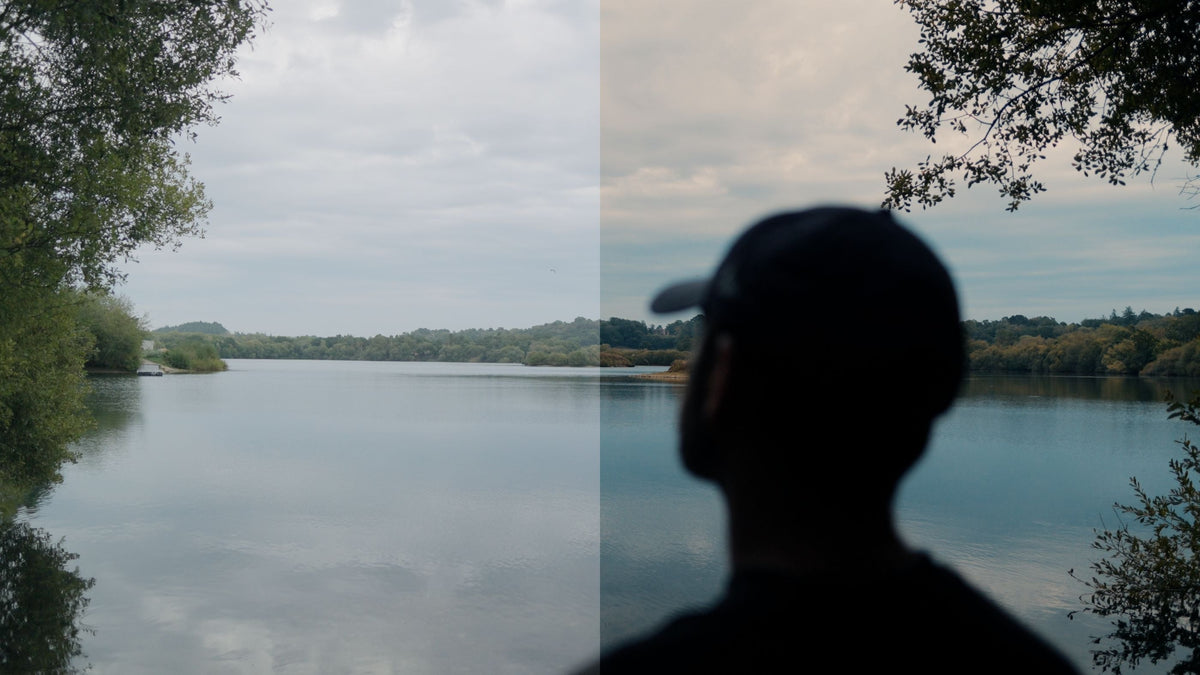
A LUT is a small file that maps one set of colors to another. That's all. It doesn't know what's in your shot, it doesn't analyze anything, and it doesn't fix exposure, white balance or noise. It takes whatever comes in and transforms it the same way every time.
That matters for this question, because a lot of the disappointment with paid LUTs comes from expecting them to be smarter than they are. A $30 LUT on badly exposed footage looks worse than a free LUT on well exposed footage. Every time.
→ Why your LUT looks bad" post, for the full list of things a LUT can't fix.
When free LUTs are genuinely fine
For conversion. If you shoot Log and you just need to get it back to normal-looking color, a free conversion LUT does the job perfectly. Apple, DJI, Sony and GoPro all publish their own. We give ours away too. Nobody should be paying for a Log to Rec 709 LUT on its own.
→ Free Aprture Conversion LUT Pack
When you're learning. If you're new to grading, a handful of free LUTs is the right place to start. You'll learn what you like, what your footage responds to, and where LUTs fall short. Spending money before you know that is how people end up with folders of packs they never open.
When you grade properly anyway. If you're comfortable in Resolve and build your looks from scratch, a LUT is at most a starting point you'll change heavily. You might not need one at all.
When you only need one look. If you've found a single free LUT you like that suits your footage, that's your look. Use it. Consistency matters more than variety.
When paying makes a real difference
Consistency across footage. This is the big one, and it's the hardest thing to judge from a preview. A good pack is built to behave predictably across different cameras, lighting and skin tones. Free LUTs are often made on one camera in one light, and they look great on that and odd on everything else. The difference shows up the second you put a drone shot, a phone clip and a mirrorless clip on the same timeline.
Skin tones. The fastest way to tell a well-made LUT from a rushed one: look at skin. Cheap and free LUTs often push skin orange, magenta or gray because the maker was chasing a mood on a landscape. A good LUT moves the whole image toward a look and leaves skin looking like skin.
Clean shadows and highlights. Badly built LUTs break the image at the edges: banding in skies, crushed blacks with no detail, highlights that roll off into a flat color. You don't notice it on a preview frame. You notice it on your 4K timeline.
Built for your camera. A pack tuned for iPhone footage, drone footage or a specific profile will usually look better on that footage than a general "cinematic" pack, because the maker has tested on exactly what you're shooting. That's why we build ours by camera as well as by look.
Time. If you shoot for clients or post several times a week, a set of looks you trust saves real hours. At that point the question isn't really whether the LUT is worth $20, it's whether an hour of your time is.
How to spot a pack that isn't worth the money
A few things I'd check before buying any LUT pack, including ours.
There are 300 LUTs in the pack. Big numbers sell, but nobody uses 300 LUTs. A pack of 300 is usually 20 looks with a few variations each, or a lot of filler. A tight, tested set of 10 to 20 is almost always more useful.
It doesn't say what it was built for. Rec 709? Log? Which camera? If the listing doesn't say, assume it was made on one person's footage and hope for the best.
No mention of intensity. Good packs tell you how they were applied in the demo (most demos are 60 to 80%, not 100%). If the preview looks great and yours doesn't, this is often why.
It's a "LUT for every editor". A LUT is a .cube file. It works in every major editor already. A listing that sells "CapCut LUTs" and "Premiere LUTs" as different products is either confused or counting on you being so.
What we'd say if you asked us directly
If you shoot Log, grab the free conversion pack and stop there for a week. Get used to converting properly and see how your footage looks when it's simply correct.
If that's enough, great. You've saved money.
If you then want it to look like a film rather than just look right, and especially if you're cutting footage from more than one camera, that's when a paid pack earns its price. Pick one built for what you shoot, apply it on top of the conversion, back it off to 70% or so, and judge it on a face, not a sunset.
And if you buy one, from us or anyone else, and it looks wrong, run through the mistakes post before you decide the LUT's the problem. Nine times out of ten, it isn't.
Quick questions
Do professional colorists use LUTs? For conversion, constantly. For creative looks, less than you'd think. Most build looks by hand or use their own saved node trees. LUTs are most valuable for creators who want a consistent, reliable look without spending an hour per video grading.
Are LUT packs a scam? Not as a category. Some are low effort, like any product. Judge them on skin tones, honest before and afters, and whether they tell you what footage they were built for.
How much should a LUT pack cost? A focused pack of 10 to 20 well-built looks is usually worth somewhere in the $15 to $40 range. Huge bundles of hundreds of LUTs for a few dollars are usually quantity over quality.
Can I make my own LUTs? Yes. Grade a clip in Resolve and export the grade as a .cube file (right-click the clip in the Color page → Generate LUT). It's a great way to learn, and if your own look works across your footage, you've got your own pack.
Do I need a LUT at all? No. Plenty of people grade without one. A LUT is a shortcut to a consistent look, not a requirement for good color.